Leading a socially relevant and generous life brings fulfilment
Yezad Sam Kapadia
Where does one start when one wishes to tell a story spread over a span of 90 years? I shall start on January 11, 1962, the day I got married. The Ashirwad prayers recited on the occasion spoke of a union of two hearts. My relationship with Rati (née Kerawala) was much more than that. It was a fusion of mind, body and soul.
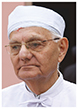
People often tell me that I do not look 90! I am not aware of what people should look like at 90, but assuming that what people say is true, I looked back to see what I had done differently from others to look different! The only answer I could fathom was how I interact with people — with respect, dignity and, most importantly, empathy regardless of their status in life. Before I left Jamshedpur I went to say goodbye to our doctors and requested them to give me a quick check-up. My physician said, "Even if your blood pressure wishes to rise, it will not! Your heart is in good shape!” At that time I thought he was pulling my leg, but he was spot on. Similarly, bone density test results reassure me that my bones are quite strong.
Most of us forget that there are three dimensions to our well-being — physical, mental, and by far the most important, emotional. It is not enough to go to the gym regularly or to jog every day. We need to interact with others.
I am not a religious person. I do not go to the fire temple nor do I follow rituals and traditions regularly. But I live a religious life as prescribed in the Gathas. "Does God exist?” There are far too many consequences of actions I have taken that I can only conclude, "Yes, She/He exists.” I heard loud cries of protest from a young friend abroad (who was recently in the news for being a member of a team that has pioneered a technique to deal with hip bone fractures). "But how can She/He exist when I am about to produce life in my laboratory?” my friend queried. I guess each one has to answer this question for her/himself.

As an ordained priest I have had the privilege of inducting several young people into our faith. At the end of such ceremonies I explain to the initiates that our religion teaches freedom of choice. However, one must realize that whatever choice we make, we have to bear the consequences. We are expected to make the right choice. We may become rich or famous. But wealth and fame are transient and can disappear quickly. How we treat others determines how we are treated.
My advice is: give till it hurts and then some more. We do not need money or any physical object to be able to donate. We need to give of ourselves. There is so much inequality and poverty around us that we have plenty of opportunity to give others emotional support or a word of cheer. There are many around us, less advantaged than we, who need our empathy and emotional support.
Anne Marie, fondly known as Ammu, was the third generation cook in our family. When her daughter Maria was born, my wife and I thought it fit to reward their loyalty by treating the child as our own. Her parents realized that the child’s future would be better if we brought Maria up in a way different from theirs. Ammu continued to cook for us while Maria grew into a gracious, well-educated young girl. When Ammu’s husband left her for another woman, Maria would sleep with her mother in the servants’ quarters, but she ate with us at the dining table. For 20 years we nurtured her until she got married.
Yezad Kapadia (top and above, holding bouquet) with
Delhi Parsi Anjuman trustees and well-wishers;
above, center: wife Rati
At the Delhi Parsi Anjuman we had a problem. Fortunately, with the support of some senior members of the Anjuman, we solved it. Income grew by over three times, room occupancy at our Mengusi Dharamshala shot up from 20% to 100% and the financial condition of the Anjuman stabilized. We had enough funding to carry out capital repairs which we had been unable to do earlier.
In our religion it is believed that on the early morning of the fourth day after death we cross a bridge from this world to the next. As we are crossing it we ourselves decide whether we have lived a life more good than evil. Hopefully, we have.