Died: Darius Minocher Forbes, 96, founder and chairman emeritus of the Forbes Marshall Group, founder director of the Centre for Advancement of Philanthropy (CAP) and past president of the Mahratta Chamber of Commerce and Industry, on August 11, 2023 in Poona.
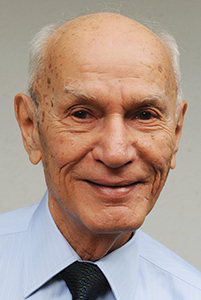
"He spent much of his life building strong businesses and institutions, and later teaching others how to do the same. He believed in the power of individuals to achieve great things, regardless of their background or upbringing,” noted a tribute from Darius’s sons Farhad and Naushad when intimating their contacts about his demise. "He had time for everyone — whether it was a senior management colleague, a salesperson trying to get an order or a carpenter fixing up an office. He had a vivid imagination and broad ambition for what was possible, not letting what had been done get in the way of what could be done. And he believed in a life of service above self, done quietly and without much fuss, just because it was the right thing to do,” they added.
Reputed for its specialization in energy conservation, environment and process efficiency, Poona based Forbes Marshall manufactures advanced products in the fields of steam engineering and control instrumentation for diverse sectors like textiles, food processing, paper, power, chemicals, etc and has almost 40 offices in India and abroad. "To truly understand the history of Forbes Marshall, one needs to understand our father. He was either the origin of, or present at the origin of, all our values, most of our policies and much of our business,” acknowledged the brothers in the foreword to their father’s biography. Business with a difference: Bicycles, Boilers, Beliefs.
When Darius started his career in Ahmedabad at the age of 20 with his maternal uncle Jeejeebhoy Marshal, he would visit five customers a day using a bicycle because that was all he could afford. J. N. Marshal was primarily a trading firm with different agencies, distributing steam turbines, electric motors, fans, switches, etc made by the German firm, AEG and diesel engines, stone crushers, water tube boilers, etc by the Czech company, Skoda... Subsequently Darius was sent for training to the Spirax headquarters in Cheltenham, UK and on his return took charge of the Spirax business of J. N. Marshall at the age of 25.
With the Indian government imposing restrictions and making imports difficult, he realized the time had come to build a factory and move into manufacturing. Land in Bombay being expensive, they purchased a 10-acre plot on the main Bombay Poona highway at Pimpri (Kasarwadi) and the first bay of the factory was inaugurated in 1959. By then, he was married to Jeejeebhoy’s daughter Maharookh who assisted him in the business. He believed those employed by their Company be considered as members, never employees, and encouraged individual and team autonomy. Calm yet resolute, even the militant trade union that called a strike for over 100 days could not rattle his composure. Over the years, "he has never chased turnover or market share… Business to him has never been the end in itself. Instead, business exists for customers, for people and for society,” commented the sons.
The official age of retirement in the country being 58, Darius chose to retire at the same age in 1984 though he continued to maintain his association with the organization as a father figure. After Jeejeebhoy’s death in 1990, a family settlement was worked out whereby Simmonds Marshall went to Shiamak (Maharookh’s brother) and his family, and Spirax Marshall to the Forbes family, the latter being renamed Forbes Marshall in 1994. "The growth I have seen in the company since I retired has exceeded my highest expectations … I would give every credit to Farhad, Naushad and (Farhad’s wife) Rati and the team they have developed… I am particularly proud that they have retained the values and driving philosophies inculcated in our organization over the years,” Darius had remarked in his biography.
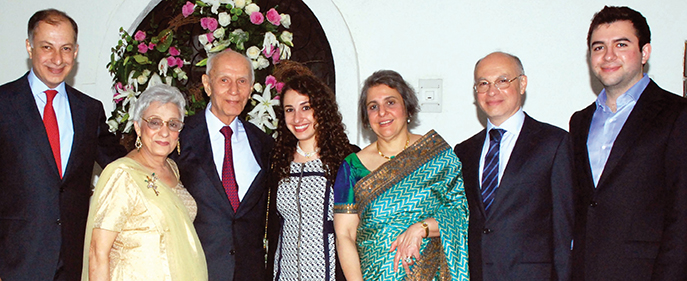
Top: Darius Forbes; above: Forbes family (from l) Naushad, Maharookh, Darius, Riah, Rati, Farhad and Darius Jr
From l: Minocher and Dolat, Darius and Maharookh Forbes
On different occasions Forbes Marshall has featured among the top 25 "Best Workplaces” in India when the employees were asked to rate their organization on aspects like credibility, respect, fairness, pride and camaraderie. Forbes Marshall scored on parameters like a comfortable and engaging work environment, open communication, management training programs and the absence of hierarchy.
Following his retirement, Darius was able to devote time to other associations, chairing or serving on their boards. He was associated with institutions like the Poona KEM Hospital and The Dastur Group of Schools Trust in Poona, the Poona Music Society, The Caux Initiatives of Change (formerly known as Moral Re-Armament — a movement that sought to eliminate the distrust and anguish following the strife of World War II through human reflection and understanding), the Poona chapter of the Confederation of Indian Industries, and of IIM (Indian Institute of Management) — Ahmedabad Alumni Association. He had received the Lifetime Achievement Award from the Indian Institute of Materials Management in Poona.
CAP as an organization specializing in charity law, finance management, resource mobilization and human resource development was formed in 1986. Giving Darius credit for playing "a key role in the early development of CAP (and)… shaping my destiny while I was still in my mid 20s,” Noshir Dadrawala, program director — legal and CSR (Corporate Social Responsibility) compliance, wrote in a eulogy, "Besides supporting it financially, he provided CAP with free office space for the first 12 years of its existence. To me personally, he was a thoughtful, encouraging and loving mentor. He used to share amazing stories of his early struggles in life which continue to inspire me. He has left behind a huge legacy of goodwill and sound values which we will continue to cherish. He not only talked about but practiced CSR decades before corporate India picked it up and later became mandatory under the Indian Companies Act 2013. Darius Forbes will continue to live through the philanthropic works he initiated in his lifetime and which his loving and caring family will continue.”
The Shehernaz Medicare Centre, a 30-bed hospital in the Forbes Marshall campus, named after Maharookh’s sister, provides free treatment not just for those working at the company but for the indigent in neighboring areas who need medical attention. The germination of this health care facility followed an unhappy incident when Darius was witness to an accident in the Chinchwad-Pimpri area. A car fell into a nullah resulting in two women passengers lying unconscious. In the absence of any medical facility in the vicinity, Darius arranged for the women to be taken in his car to the distant Sassoon Hospital where bureaucratic procedures further delayed treatment. This experience convinced Darius to be equipped with a medical center on their premises to assist in case of any emergency .
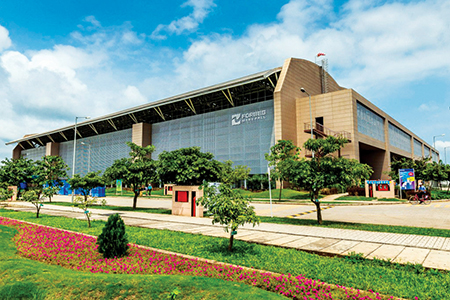
Forbes Marshall factory in Chakan
The Forbes Foundation, currently run by Rati, prioritizes education but their social initiatives have also included provision of clean water, sanitation and electricity for local homes. Welfare programs encourage women from weaker sections to become self-supporting through sewing, craft or making things they can sell.
Darius considered it ironic that in India "we mix religion with charity.” He felt trusts would "serve society better if the two were separate. Religion is a personal matter. Don’t sit and preach to others. That is not your job. Honor and respect every religion,” he had advocated (see "How charity works,” Parsiana, December 7, 2009). "All joyous or solemn occasions (at Forbes Marshall) always began and do begin with multi-faith prayers,” revealed Chhaya Gogate when sharing inputs on the industrialist.
"As Parsis we don’t lack in philanthropy,” observed Darius. "Being a minority community has in many ways benefited us. With a low profile, we have used our wealth to benefit our community members and others. We have benefited from a rich heritage and with a new generation of well-educated boys and girls have a great future to look forward to,” commented Darius in an article that he wrote for Parsiana’s golden jubilee issue (see "Religion and reflection,” Parsiana, November 7, 2013).
Describing his formative years, Darius had written in his biography: "We had enough to be happy and comfortable, but avoided waste. I learnt as a child to use resources carefully — a habit that has endured.” Born in Bombay, Darius moved with the family to Madras when his father Minocher’s services as an interpreter were solicited by the Madras High Court since he was conversant with several Indian languages. The family’s first car was a second-hand Standard which arrived around 1940 but Minocher would use it only if it was raining. Otherwise he took the tram to the High Court.
After his early schooling at The Presentation Convent, Darius studied at the Madras Christian College School. Perturbed by their son’s "nationalist inclinations,” participating in anti-British demonstrations and protests, and having come very close to being shot, his parents felt he should be sent away for his own safety after permitting him to make a career choice. He refused to consider law as an option for he did not want to swear allegiance to the King of England. For the ICS (then the Imperial Civil Service) too, the oath was a prerequisite. He therefore thought engineering was the best option and decided to study mining and metallurgy at the prestigious Banaras Hindu University (BHU). Within three months of joining BHU, however, the budding engineer fell seriously ill and Dr Sarvapalli Radhakrishnan, then vice chancellor of the University (and later President of India) himself sat two nights applying a cold compress to bring the fever down. Darius’s mother Dolat thereafter refused him permission to complete his education in Banaras and chose instead to send him to the Nadirshah Eduljee Dinshaw Engineering College in Karachi, where his sister Thritty lived after marriage. But since he did not take his studies seriously he was asked to return to Madras.
Darius considered himself fortunate that he had studied under some of the most learned teachers. He was saddened that children in subsequent decades have missed out reading or learning classics works by William Shakespeare, Charles Dickens, Homer and thereby identifying with characters and distinguishing the good from the bad. For Darius, it was necessary "to encourage our youngsters educated abroad to return and contribute their learning to build and create a great India.”
Among the lessons that remained with him throughout life was his father’s message that God is not one who exists in places of worship but is in the inner self of every human being. When faced with conflicting thoughts, if each of us make time to reflect, if we lend a moment to listen, our "inner voice” gives us the answer!
The inspirational industrialist is survived by his sons Farhad and Naushad.