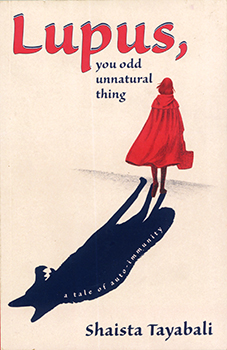
Lupus, you odd unnatural thing: a tale of auto-immunity by Shaista Tayabali. Published in 2021 by the author, 14 Hauxton Road, Little Shelford, Cambridge, CB22 5HJ, UK. e-mail: shaistatayabali@gmail.com; website: www.lupusinflight.com. Pp: 199. Price: Rs 399.
It is the title and the cover of the book with the wolf and Red Riding Hood that first holds your attention and arouses curiosity. Lupus, which is the Latin word for wolf, is an inflammatory disease caused when the immune system attacks its own tissues. 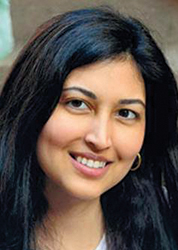 There is no cure for lupus. England based Shaista Tayabali’s (pictured) motivation in writing about her experiences with the disease came from a chance reading of a book by American writer William Schwalbe about his mother who was dying from pancreatic cancer. Tayabali decided to write on her own illness.
From the first chapter, her writing takes one to the place related to her experiences in a hospital’s Patient Short Stay Unit (PSSU). The hospital has become a second home because of her frequent visits for intravenous therapy (IV) checks and immunotherapy. She has developed lasting friendships in the Unit.
One cannot but feel admiration for her caring and positive attitude through those difficult years. Her writing makes the people she meets come alive.
From the initial diagnosis of lupus, through the ups and downs of the genetic disease, one realizes the tremendous strain on the individual as the illness fluctuates. Her portrayal of the patient-doctor relationship is perceptive in the context of the seniority and expertise of the treating doctor, and his/her mannerisms towards the patient.
On a number of occasions the doctors treat her rather as an object than a patient, she laments. As doctors, we were always taught to treat our patients as one would a close relative, and when offering advice to do so as one would to a personal friend. Medical personnel should avoid discussing a patient’s illness in their presence. This causes stress and may delay recovery.
The stark statement, "Lupus is incurable,” is well demonstrated throughout the book; even during the dormant stage, depression sets in as the patient knows that the illness will recur. The writer demonstrates her frustration when she is told to fight her illness. Tayabali compares it to a civil war within her own tissues, leading to destruction.
Of all her symptoms, her fear of losing her sight through a galloping myopia is the worst. More so because her father has totally lost his vision.
 Tayabali’s main thread woven through the pages of her narrative reflects the manner in which curious friends and strangers inquire about her illness, and her acceptance of the inevitable. What keeps her going are her outlets in poetry and literature.
There is also the constant feeling of hope every time a new drug is discovered: a balance between optimism and pessimism. Her sense of humor emerges at various instances of her hospital stays. Her stamina is buoyed by watching her father’s activities, including performing yoga exercises at his age. She draws strength from books and from individuals who have suffered and risen above their sufferings. She reflects on her home and early life in Bombay.
In the last chapter she refers to herself as a kintsukuroi — broken pottery — healed not by gold and lacquer, but by the gold dust of love and friendship.
When Parsiana asked whether I would review this book I readily agreed, not only because the title aroused my curiosity, but because I realized it was written by the daughter of a good friend, Dr Mujtaba (Chotu) Tayabali, married to Perveen Nadirshaw. He happened to be my classmate through school and college, but somehow we lost touch after he left Bombay and settled in England. So I was thrilled at the thought of reviewing his daughter’s book and renewing our friendship. Moreover, Shaista’s dad had gifted me a painting done by him which I love, and which still holds pride of place in my sitting room. Dr PILLOO HAKIM
Dr Hakim is professor emeritus, Grant Medical College and Sir J. J. Group of Hospitals, Department of Ear, Nose and Throat (ENT) and Head and Neck Oncology, and honorary consulting ENT surgeon at Saifee and The B. D. Petit Parsee General hospitals.