Even a sceptic will concede that the devotional fervor at most fire temples in cities and larger towns, particularly on days of religious significance, has not dimmed. And the worshippers are not merely the old and middle aged. We often read in Parsiana accounts of atash behrams and agiaries being renovated in style. From the impressive restoration of the Iranshah in Udvada by the Shapoorji Pallonji Group at the cost of several million dollars, to renovating the agiary in moribund Daman, instances abound. The Dadysett Atash Behram, the oldest in Bombay, looks serenely picture perfect after a makeover a few years ago through the munificence of the same business group. So does the last and eighth atash behram, the Anjuman na, located a few kilometers away. Unsung efforts by dedicated volunteers to spruce up fire temples are numerous.
Visit the over 300-year-old Banaji Limji Agiary in the Fort during the 18 days of muktads; there are hundreds of vases and karasyas laden with lilies and roses with little standing space. And Boyce, the only agiary where there is no electricity and rituals are performed with great rigor. There are 50 agiaries in Bombay and Thana alone, plus more than 50 in southern Gujarat and other parts of India. Gorgeous. Serene. Awe-inspiring. Soothing.
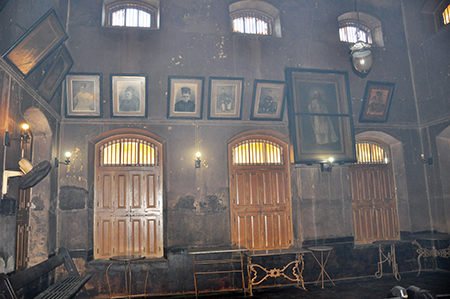
An agiary in South Gujarat
But what about the ones in small towns and even far-flung hamlets which have virtually no footfalls as worshippers are in acute short supply? Full-time priests to tend the fire five times a day and offer boi are just not available in several of these places. Locked fire temples are opened every alternate day, often by behdins (lay persons). Trusts owning fire temples have no funds to pay salaries even to part-time mobeds. It was unthinkable even a decade ago that non priests would do the boi, which is happening increasingly now. Having women volunteers will be a matter of time; if not practicing priestesses. In Lahore, two Parsi ladies (now only the survivor) looked after the agiary; while in Bhuj, a non Parsi manager is in charge.
Even if one were to ignore the dissenters who have made it their business to oppose the sale of any Parsi charity property regardless of the circumstances, the mainstream orthodox even join in the chorus against any attempt to simultaneously house two or more fires in a single fire temple (as in Lonavala where, along with the original fire, the one brought from Aden is also enthroned) or merge the isolated fires of two or more fire temples, despite liturgical precedents. Litigation is initiated to stall such co-housing or mergers. Often harassed trustees give up the battle and there are instances where the fire temples remain locked for days.
Extinguishment of a consecrated fire is sacrilegious. The orthodox, who assert that there is a counterpart of the physical fire on the higher planes, like enthroned deities of great spiritual power, are themselves responsible for such extinguishment with their mindless opposition to such mergers. In a world where everything is relative they must ask which is the greater ritual transgression — merger or extinguishment? Of course there are rare instances when adventurist trustees deliberately run down the place so they can sell the property. But this does not mean that one should mindlessly oppose every sale and every merger.
Our fire temples are the biggest manifestation of Parsipanu. They unite Parsis across the spectrum from the traditional to the modern, engendering bonds between toddlers bowing before the sanctum sanctorum to the aged deriving great solace in the evening of their lives. Many agiaries are heritage structures replete with the history of the struggle of Zoroastrian refugees in India. Not so apocryphal stories of miracles are associated with several fire temples. Hence, preserving and protecting fire temples is a given. But it is easier said than done.
Very elderly trustees who contribute zilch refuse to resign, possibly believing that trusteeship will earn them brownie points on the Chinvat bridge which they are soon to cross. Indifference among those who are honest and capable is the bane of the community. And the occasional scamster worms his way in to become a trustee. Those who are committed to manage fire temples are deterred by the calumny heaped on them in the social media by the ultraorthodox or plain idiots who delight in such campaigns.
The time is ripe to actively merge those fires where the footfall is minimal while keeping a vigilant eye on what happens to the property or its sale proceeds. Robotics too may provide an answer. It is technologically possible to program a robot to enter the sanctorum precisely when the gah changes, place wood on the afarganyu and carry out other acts to ensure that the fire is never extinguished, all without human intervention. Worshippers can, as in Singapore today, open the digitally locked agiary by following the protocol. Cost wise too, this is feasible. However futuristic this robotic scenario may seem, it is quite likely to happen.
Those who raise false alarms against mergers and possible sale of property where there is no other choice are harming the very cause they purport to espouse. The rest of us must learn to ignore their ravings and ranting. The trustees must develop a thick skin against such attacks as part of being in public service. As for the devotees, stepping up the frequency of visits as well as going to different fire temples will help. Apart from immense spiritual benefits (for those who believe), a visit to the fire temple is immensely uplifting and improves the quality of the day. It also raises the morale of the panthakies who manage fire temples, the practicing mobeds and the support staff. If we can afford to, we must pay the mobeds liberally and donate generously towards the cost of repairs and firewood.
It is time we focus our collective efforts to get more people in, instead of fighting about whom to keep out. Which reminds one of the technical-minded seeker of alms asking whether the donor has complied with the laws of money laundering before making the donation.
According to doctrine, fires protect those within their radius and absorb negativity during each act of worship. After reciting the Atash Nyaish, many in the know also recite the second and eighth paras of the Moti Haptan Yasht in the belief that these prayers enable the fire to cleanse every cell of the devotee’s body. Be that as it may, it is time to guard the protectors themselves by being sensible and unblinkered.
Berjis Desai, lawyer and author of Oh! Those Parsis and Towers of Silence, is a chronicler of the community.