Jaslok Hospital’s fertility department under noted s pecialist Dr Firuza Parikh
celebrated the successful birthing of 2 0,000 babies
Farrokh Jijina
"There is no I in IVF (In Vitro Fertilization), only We,” stated Dr Firuza Parikh, head of the department of assisted reproduction and genetics at the Jaslok Hospital and Research Center. The noted gynecologist was speaking at an event on July 7, 2023 at the Trident hotel to celebrate the successful birthing of over 20,000 babies by her department. She emphasized the joint approach towards fertility between the medical fraternity and the couples.
The occasion coincided with the golden jubilee of the Hospital, a multi-specialty facility with 350 beds including 75 for intensive care, over 300 consultants and over 200 resident doctors.
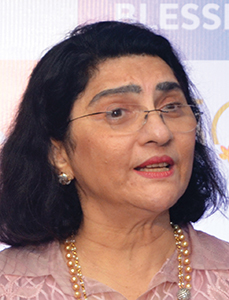
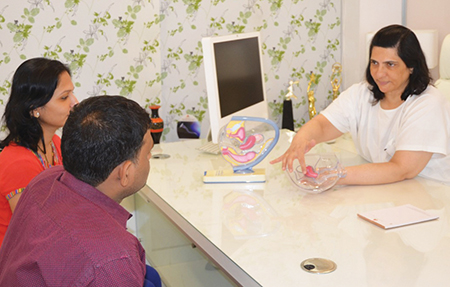
The department that she runs, branded Jaslok-Fertiltree International Fertility Center, has state-of-the-art facilities for assisted reproduction which include, among others, intrauterine insemination where the most vital sperms are inserted into the uterus, selective healthy sperm injection, semen banking and freezing of ova. Under the cumulus aided transfer, a technique reportedly pioneered by Parikh in 2005, a fertilized embryo is transferred. An andrology laboratory (one that specializes in infertility and impotence) for diagnostic work and therapeutic tests functions under the department.
"I started off with a small space on a balcony (of the Hospital)… They saw the benefit of the work I was doing,” said Parikh.
"It was Firuza’s resilience that made me go on,” stated single IVF parent Ritu Parekh at the event. "She was my guardian angel, my doctor and my rock,” she exulted about being a "proud mom at 36… a life-changing experience.” Acknowledging the unstinting support of her brother and her parents in her decision to be a mother to Ahilya, now eight, Ritu narrated that "a reputed” pre-primary school had refused her child admission as her birth certificate did not mention her father’s name. "It is important not to make up a story about her birth to a child,” she advised, stating that when the little girl was old enough to understand, she depicted the birthing process using paper and pencil.
For actor Tusshar Kapoor, when "new life” came to him in the shape of his son Laksshya it fulfilled him in ways he had never imagined, he told the gathering. On the day the doctor helped him to become a father, June 1, 2016, he acquired a new identity. "Nothing else matters… Most people nurture children… I was nurtured to become a dad,” he said, advising the audience to read about his experiences in his book The bachelor dad: My journey to fatherhood.
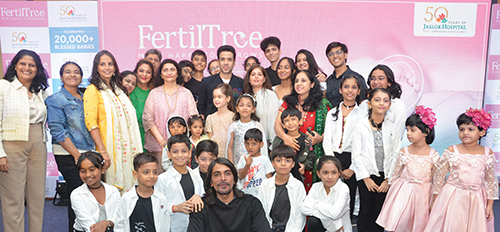
Top and above, standing, 6th from l: Dr Firuza Parikh with happy parents and children
Krishiv and Kyra Modi are siblings with a difference. In 2019 when he was two years old, Krishiv helped his older sister, then six, overcome thalassemia major, the disease that causes breakdown of red blood cells, with his stem cells that were infused in her. "The future of IVF is indeed exciting!” exulted Parikh, who is also a visiting professor in the department of obstetrics and gynecology at the University of California, Los Angeles, USA. "I love reading about the latest innovations in IVF as a way of relaxing. My other relaxing pastime is watching suspense movies!” and spending time with the family, says Parikh.
Hospital trustee Vinod Chanrai referred to the various achievements of Parikh’s department: being awarded as the best IVF center in India; and the use of artificial intelligence in the IVF management. Chief executive officer of the Hospital Jitendra Haryan called Parikh the "epicenter of the energy” of the department she leads. "The achievements are a testament to her tireless efforts and the high standard of work ethics and research.”
The speeches were interspersed with dances performed to Bollywood numbers by the children Parikh had helped bring into the world. The littlest ones were accompanied by their mothers.
In her welcome address, the much awarded medico spoke of the "amazement, excitement and gratitude” she continues to experience after over three decades of practice. Her vote of thanks referred to "all those who believed in me,” ending with "I always try to emulate humata, hukhata hvrashta (good thoughts, words and deeds).”
An evolving science
Under Parikh, Jaslok Hospital was reportedly the first to set up a pre implantation genetic diagnosis laboratory in the country for testing genetic disorders in 1999. "Consequently, we have many children born free of genetic diseases like thalassemia, sickle cell disease and others,” wrote the doctor in a detailed email to Parsiana.
Parikh says that IVF is an evolving science, hence yesterday’s dilemmas may not be relevant today. "Earlier, we would transfer more than a single embryo to enhance chances of pregnancy… However, that process carries a risk of multiple pregnancies. It is preferable to transfer a single good quality embryo, unless the parents prefer having twins. This is what we practice at our Center.” Another ethical issue that comes up occasionally is a request for gender selection. "We do not encourage this in any form as we believe that babies are a gift from God and every child is precious.” The Assisted Reproductive Technology (Regulation) Act of 2021 regulates the functioning of assisted reproductive technology (ART) clinics and ART banks in the country. The doctor told us that the Act now "does not permit single men to have children through IVF and surrogacy. Even single women have to be divorced or widowed to avail of surrogacy.”
The precipitating factors that lead to infertility include "advancing age in the female partner giving rise to poor egg quality, lifestyle factors contributing to polycystic ovaries syndrome (a hormonal disorder causing enlarged ovaries with small cysts), problems with the fallopian tubes and uterine factors.” In the male, the challenge is poor sperm quality resulting from diabetes, smoking and lack of sleep, she explained. Among Parsis, she said the compounding factor is age, as many couples delay childbearing until they are settled in their careers and have the comfort and security of owning their homes. She believes that community members are open to seeking help, but some face financial difficulties. "For them, the Jiyo Parsi scheme, which is a great service to our community, helps.” (The status of the scheme at present is unknown.) Community members who work with Parikh in her 60-member department include Drs Anahita Pandole, Prochi Madon, Percy Chibber and Parikh’s sister Farida Sherdiwalla who looks after administration.
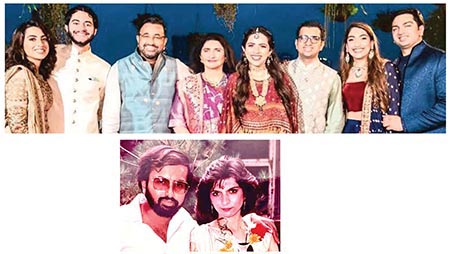
Top from l: Nikita, Peshaan, Rajesh, Firuza, Shivani, Manish, Meenal and Swapneil;
above: Rajesh and Firuza in their younger days
The expenses on procedures are variable, ranging from a few thousand for simpler procedures such as intra uterine insemination to a couple of lakhs for more complex procedures. Unfortunately, insurance does not usually cover all the costs. Some multinational companies do support infertility treatment, she noted.
"Sadness in the eyes”
Born to Minocher and Sheru Sherdiwalla, Parikh credits her science teacher at Alexandra Girls’ English Institution, Shalini Talpade, for instilling a love for science in her. "She told me that one day, I would become a fine doctor.” An alumna of King Edward Memorial Hospital’s Seth G. S. Medical College, while doing her residency at the Wadia Hospital in Bombay she "saw the sadness in the eyes of infertile couples and decided to specialize in infertility management.” This was followed by a fellowship at Yale University School of Medicine under the mentorship of Dr Alan DeCherney, renowned obstetrician and gynecologist who specializes in reproductive endocrinology and infertility.
Her doctor husband Rajesh, director of psychiatry and also of medical research at the Jaslok Hospital, believed to be the first neuropsychiatrist (the branch of medicine that combines neurology and psychiatry), was training at the Johns Hopkins University Hospital in Baltimore. "We were both very clear in our intent to return to India… Although both of us received many job offers, we decided we wanted to be with our families and have our children grow up in India.”
She stated that Rajesh is multifaceted. "He is an avid photographer, painter, aquarist, trekker, fluent in six languages, an accomplished writer with three national bestsellers (see "Vaccines and the virus,” Books, Parsiana, August 7-20, 2021).” Their oldest son Swapneil, an internal medicine consultant whose clinic focuses on obesity, longevity and care of the elderly, also heads a health startup focusing on artificial intelligence in healthcare. He is married to Meenal, an obstetrician and gynecologist with a dual specialization in infertility and embryology. Swapneil has co-authored a book on Covid with his father (see "Coping with Covid,” Books, Parsiana, October 7-20, 2021). Son Manish is honing his skills in mindfulness and has trained many individuals in this science, noted Firuza. "His passion is improving human potential… His talented wife Shivani has extensive experience in mindfulness and meditation and aspires to help the younger generation to live a more balanced and holistic life.” Daughter Nikita is a filmmaker, involved in documentaries focusing on education for children from low-income areas. Her partner Peshaan Khajotia is a successful entrepreneur and a keen sportsman. The Parikhs’ children are not navjoted. At the July 7 event, among the other people in her life Firuza offered thanks for, were her "six children.”
Treasured award
Which of her myriad awards does Firuza treasure the most? "The one that I received for excellence in science and medicine at the 12th World Zoroastrian Congress, New York in 2022 (see "Plaques and plaudits,” Parsiana, September 7-20, 2022)… I have always been a proud member of my community with a profound sense of belonging. To be acknowledged by my Zoroastrian fraternity is especially gratifying.” Her curriculum vitae lists over 30 awards between 1995 and now, from the medical fraternity, accreditation bodies, media houses, pharmaceutical companies, welfare organizations and others.
The medico is a proponent of "holding on to the tenets of our religion, good thoughts, good words and good deeds… These are eternal guiding principles… These tenets have enabled me to eliminate ego from my mind.” To her, dakhmenashini "made sense earlier…However, with depletion of the vulture count, we should either devise ways of preserving vultures or be open to alternative methods... I have learned to respect all religions, ideas and forms of work… I look forward to and listen to suggestions and do not withhold praising people and appreciating their efforts. Above all, I believe in human equality and gender equality. The same rights that are given to Zoroastrian males should be given to women.”