While at Cambridge Dr Homi Bhabha
plunged into extracurricular activities and
sports with a vengeance
Bakhtiar Dadabhoy
This extract from Homi J. Bhabha: A Life by Bakhtiar K. Dadabhoy (Rupa Publications, 2023) has been reprinted in Parsiana with permission from the author and the publishers.
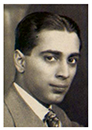
"Science shall be my wife, art my mistress.”
Apart from the fact that Dr Homi Bhabha disliked mechanical engineering and, therefore, did not invest too much of himself in it, there were many distractions for a young man in Cambridge. He plunged into extracurricular activities and sports with a vengeance. Soaked in history and tradition, replete with chapels, Gothic spires and medieval arches, carefully tended lawns and flowing through it all, the gentle river Cam, Cambridge held Bhabha in its thrall. He also enjoyed some of Cambridge’s pleasures: punting (propelling a boat with a pole) on the Cam, Sunday picnics on the riverbank and afternoon teas. The days were busy with supervisions (the Cambridge equivalent of Oxford tutorials), where students were taught in groups of two to four. The evenings, too, were full, and Bhabha must have gone walking along the Cam or for a run on the university cricket ground, popularly known as Fenners. And, of course, there were plenty of parties to attend.
On his arrival at Cambridge, Bhabha took to coxing in the boat races. (A cox in a boat race is the only person who does not hold an oar, shouts encouragement to the rowers and steers the boat by guiding the rudder.) Bhabha’s skill at this activity seems to have left a lasting impression because more than three decades later, he would be remembered as the "cox of the fifth boat.” Wilfrid Bennett Lewis, a fellow student who later headed the atomic energy program in Canada (and had much to do with Bhabha in that capacity), recounted: "We first met as freshmen at Cambridge in the same college, Gonville and Caius, in 1927, and in its boat club… Being at first light in weight, Homi Bhabha was appreciated as a coxswain in the rowing eights; he was, however, growing and putting on weight so he transferred his athletic activities to track running at Fenners… and to tennis.”
Top: Dr Homi Bhabha; above: view north towards Clare College bridge in Cambridge Photo: Wikipedia
Cambridge Boat Race crew 1914;
inset: Caius Boat Club logo Photo: Wikipedia
The motto of the boat club was "labor ipse voluptas,” in Latin, which means "the pleasure is in the work itself.” This motto could not have been more apposite because later in their lives both Lewis and Bhabha would find great pleasure in their work. The two competed for a research fellowship at the college, which Lewis won. After Bhabha’s death, he reminisced, "Perhaps my need was greater for it fell to me. We remained good friends and later the balance was corrected. We both became Fellows of the Royal Society, he first; and then he was made an Honorary Fellow of Caius College, a very high distinction.”
Bhabha also indulged his passion for western classical music and painting while at Cambridge. He listened to gramophone records, bought sheet music to understand the composition and structure, and even attempted to write a few compositions himself. He wrote to his lawyer friend Homi Seervai about how he was studying counterpoint for an hour every day and wrote to his brother, Jamshed, about a performance of Ludwig van Beethoven’s Ninth Symphony which he had witnessed in London in November 1927. He said that ever since he had come back from the concert at about 11.00 p.m. or earlier, he had been constantly thinking of the Ninth Symphony. He was so overwhelmed by it that he could neither talk nor think of anything else. He told his brother that he had walked back in a dream and was surprised that he had got back at all. It had been the sublimest and happiest time he had ever had in his life.
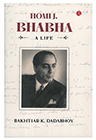
Jamshed, who was five years younger than his brother, credited himself for Homi’s love of poetry. He used to give his brother books by poets like Percy Bysshe Shelley and John Keats to read. As a result, Homi could quote freely from Shelley, Keats, Lord George Byron and John Milton. Jamshed joined his brother in Cambridge a few years later to do his Historical Tripos there.
Homi was passionate about music and, if his letter to Seervai is any indication, it ranked above his love for painting and mathematics: "I am manifestly efficient (I don’t mean in any superlative degree) at mathematics and painting, and I like music more than I like either of those, in fact more than anything else — it would therefore be natural to suppose that in the end I will be able to compose as well as I paint or do maths. I don’t know if the reasoning is correct. I often wonder what it is that makes us like music — as much. It is not as if I possessed a ear that could detect subtleties of harmony, etc which others can’t. I would like your views on the subject. I would value your suggestions and opinions.”
Homi made it a point to visit art galleries wherever he went. His observations to Seervai show his deep insight and understanding of the art he saw: "It is interesting to note that the works, in art or music, produced just before the war all manifest violence and force. British art critic Frank Rutter observes that in the abstract works of Russian artist Wassily Kandinsky painted just before the war, the pictures contain guns, falling houses, etc. He pointed this out to the artist who admitted that when he had painted them he was not even aware that war was imminent nor was he consciously trying to predict it. I suppose the violence and conflict of forces in the intellectual atmosphere affect artists more than others, and it unconsciously finds its way into art.”
Many years later, when physicist and policy maker M. G. K. Menon asked Homi why he had chosen science as a career instead of the arts, the latter replied that while the arts made life worth living, he wanted to pursue science as a profession.
To be continued