Several sessions at the 12th World Zoroastrian Congress focused on the body and mind, and the community’s susceptibility to certain diseases
Parinaz Gandhi
"Are we conscious of the number of misses of good deeds that we could have done?” asked Dr Mahzarin Banaji when speaking on "Blindspot: Hidden Biases of Good People” at the 12th World Zoroastrian Congress (12WZC) in New York on July 2, 2022. The subject of her talk was the same as the title of her widely read book that she has co-authored. Frequently, our behavior is inconsistent with our good values because "our decisions are driven by ‘implicit’ preferences and beliefs,” said the professor of social ethics in the Department of Psychology at Harvard University.
Everyone has implicit, or unconscious, biases resulting in actions at variance with our values and obstructing the very goals we strive for as individuals and professionals. While we may extol the principles of good thoughts, words and deeds, our actions come across differently. To recognize such implicit biases and show the perplexing manner in which our minds work, her participatory session involved educational exercises. Once we are aware of our mental blindspots and know where biases stem from, we can outsmart our minds, she sought to impress on the audience.
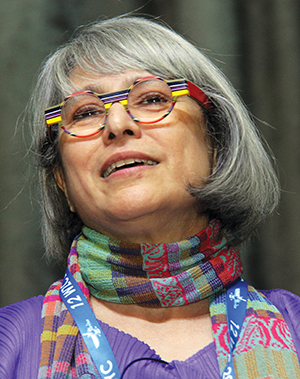
Dr Mahzarin Banaji: "see what is worthy of content" Photo: Jasmine D. Driver
Banaji enjoys the distinction of receiving awards for teaching excellence at both Yale and Harvard. Additionally she is the recipient of the American Psychological Association’s Award for Distinguished Scientific Contribution, and two awards from the Association for Psychological Science: for a lifetime of significant intellectual contributions to the basic science of psychology and for applications of scientific research.
Addressing a community that takes pride in its so-called "purity,” Banaji remarked, "We have never been pure.” She cited 13th century poet Rumi: "Every single one of us is a jackass but with wings of angels tacked onto us.” Humans have the capacity to grow and change, she noted. The mind is operating far below the conscious level. "Conscious awareness allows us to analyze data...and change our minds.” It is the prefrontal cortex in the brain that is good at remembering and allows us to improve, to be better than what we were.
It is due to implicit bias that light skinned people are associated with good and dark complexioned with evil. Implicit bias is no less a problem in health care, said Banaji. Black patients routinely receive less pain medication than do whites, but not because their physicians are overtly racist. The doctors’ treatment changes when a graph highlighting the actual data on race disparities in health care system is made available to them, with no specific instruction, only to create awareness. It is due to such awareness that over the years there has been a demonstrable decrease in implicit biases toward gay people. She spoke of the importance of gender neutral language.
Our unconscious associations arising from cultural influences and social norms indicate how our brains work, said Banaji. The gathering was made to listen to an audio clip of a girl from a Valley school. "The sound of her voice did not ring to my ears as the sound of authority,” stated Banaji. Acknowledging such biases, she urged, "Can we look past what is irrelevant and see what is worthy of content?...
"We have simple notions of how the world ought to work. Our expectations are so powerful, they cloud out what is relevant,” she mentioned. The audience was shown a short video clip of a basketball game in progress with the image of a lady holding an umbrella walking across the court. Most in the audience had failed to notice the lady. "If I don’t see correctly, how can I make the right decision?” Banaji sought to impress on the audience how data is frequently processed inaccurately when the brain makes mistakes due to "inattentional blindness or perceptual blindness.” This occurs when an individual fails to perceive an unexpected stimulus that is clearly visible due to lack of attention rather than any eye defect.
To Banaji, being born a Parsi was "luck number one.” That her parents were "deeply liberal,” she considered "luck number two.” Meeting the scholar of Zoroastrianism Prof Stanley Insler in 1986 when she was a student at Yale she listed as "luck number three” for he helped her understand her religion.
Just as poet Amanda Gorman spoke of a nation that "isn’t broken, but simply unfinished,” Banaji believed that since "our minds are not accessible to us,” we should be constantly open to the possibility of learning. "It is not the strongest who will survive nor the most intelligent but the ones who are the most adaptive,” she emphasized.
The sessions (below) on medical wellness and genetics have not been reported at length as these were planned as concurrent sessions at the Congress that Parsiana was unable to cover.
Demystifying depression
Many Zoroastrians struggle with depressive symptoms and anxiety at different times. These are linked with lower life satisfaction, disrupted family relationships and other negative outcomes, including suicide attempts. While the mental health of Zoroastrians has not been sufficiently researched, sharing available research findings in a meaningful way could benefit and strengthen the community.
"Conquering the unquiet mind: A guide to mental wellness” was one of the sensitive sessions at the 12WZC that saw contributions from academician Dr Firdaus Dhabhar, psychiatrist Dr Khushro Unwalla and lawyer Delna Palia with moderator Dr Farin Bakhtiari, an academician. They identified ways to recognize mental health disorders like depression and stress-related anxiety. Also incorporated was an interactive visualization exercise meant to release anxiety and embrace a positive perspective for future goals. Just as family cohesion and support are known to alleviate depression, ready availability of professional services is reassuring.
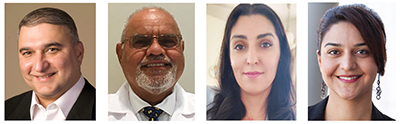
From l: Dr Firdaus Dhabhar, Dr Khushro Unwalla, Delna Palia and Dr Farin Bakhtiari
Dhabhar directs the Laboratory of Stress and Resilience and is a professor at the University of Miami in the Departments of Psychiatry, Immunology, and the Sylvester Comprehensive Cancer Center. He has conceptualized the Stress Spectrum as a guide for maximizing good stress that can help boost immunity after surgery and vaccination, and minimizing bad stress that can adversely affect the mind and body. Being a Zoroastrian priest he aspires to create a network that offers resources to enhance and restore mental health and maximize Vohu Mana, the good mind, within and beyond the community.
As a lawyer Palia honed her skills in facilitating healthy communication to achieve mutually beneficial solutions. Her curiosity in human dynamics led to researching neurological pathways within the human mind. She has studied metaphysics, metalinguistics, hypnosis, trauma and negative emotional release and neuro-linguistic programing. Leading workshops in the field of mindfulness and higher consciousness, she endeavors to connect the ancient and modern laws of the universe to facilitate being the light that ignites the fire within.
A distinguished fellow of the American Psychiatric Association, Unwalla works at the Arrowhead Regional Medical Center and holds senior faculty positions with Loma Linda University, California University of Science and Medicine, St George Medical School and Western University of Health Sciences. He treats patients using the bio-psycho-social-cultural-spiritual model in a multidisciplinary setting and trains medical students, social workers and psychologists.
An assistant professor of developmental psychology at California State University, Bakhtiari’s general research interests focus on the well-being and development of adolescents and young adults, particularly from immigrant families.
Genetic susceptibility
Ethnic groups differ in their genetic susceptibility to diseases. Two sessions at the 12WZC sought to expound on the genetic susceptibility of Zoroastrians to specific diseases.
The Avestagenome Project undertaken by Dr Villoo Morawala-Patell is focusing on the global Zoroastrian population for development of novel biomarkers and drugs for cancers, neuro-degenerative conditions and rare disorders. It is a "landmark, first-of-its-kind comprehensive bio bank data base of Zoroastrians” for which 4,600 blood samples have been collected with the target being 10,000 subjects. Founder and chief medical director of Avesthagen Limited based in Bangalore, Morawala-Patell is an innovator and entrepreneur involved in international biotechnology development, academic and corporate leadership. She has won national and international acclaim as a scientist, including the French National Order from President Nikolas Sarkozy of France.
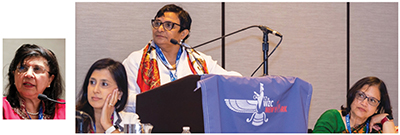
Above from l: Dr Freny Vaghaiwalla Mody, Ushtavaity Davar Canteenwalla,
Dr Villoo Morawala-Patell, Dr Saroja Voruganti Photo: 12WZC 2022
Avestagenome’s contribution to the understanding of disease, it is hoped, will lead to precision medicine driving heath care in the future, providing tailored treatments and prevention strategies keeping in mind people’s unique characteristics, their genome sequence, health history, lifestyle and diet. Variants linked to aging disorders, certain cancers and rare diseases were found and are being further developed as potential biomarkers and drug targets.
The session on "Zoroastrian Genes and Disease Susceptibility” at the 12WZC, moderated by Morawala-Patell, highlighted the importance of identifying factors that could lead towards betterment of health. Participating in this session were Ushtavaity Davar Canteenwalla of New Jersey, a genetic counselor. She founded FIND Genetics five years ago as an independent telemedicine genetics consulting practice that encompasses reproductive, adult and general genetic counseling, consulting in clinical operations, genetics education and mentoring. Earlier she ran a collaborative care fetal diagnostic center at Columbia University Medical Center working in prenatal, pediatric and cardiac genetics.
Professor of clinical medicine, David Geffen School of Medicine at the University of California, and director, Heart Failure and Preventive Cardiology Programs, Department of Veterans Affairs, Greater Los Angeles Healthcare System, Dr Freny Vaghaiwalla Mody has devoted over 30 years of research to cardiology. For distinguished service to the community, advancing the field of cardiovascular medicine and excellence in education, she has won acclaim over the years.
Associate professor of nutrition at the University of North Carolina, Dr Saroja Voruganti is conducting research to determine the genetic and lifestyle factors that increase the risk for heart and neurodegenerative diseases. Additionally she plans to identify non pharmacological approaches to prevent or minimize the risk for these diseases in diverse ethnic populations. Having conducted a pilot study on the Parsi community she is seeking to conduct a large-scale study to validate the results which in the long run would help formulate nutritional and lifestyle interventions.
Reports on other sessions at the 12WZC will be carried in forthcoming issues of Parsiana.